Hey guys, let’s cut to the chase: if you’ve ever wondered why your online package arrives in one piece (or why that fragile mug you ordered didn’t shatter), paper packaging boxes aren’t just plain, boring cardboard. As a paper packaging box supplier, I talk about this stuff every single day, and the shock-absorbing game our boxes play is way more technical than you’d think—no, it’s not just “it’s squishy.” Let’s break this down like we’re chatting over coffee, not sitting in a stuffy boardroom. Paper Packaging Box

First off, let’s get one thing straight: when people ask “how do paper boxes absorb shocks?” they’re usually picturing a flat, brown cardboard box. But here’s the tea—most of the good shock-absorbing ones aren’t that basic. We’re talking about corrugated paperboard, right? The stuff with that wavy middle layer, called a corrugating medium. I’ve sourced this stuff for years, and it’s not just random waviness. That wave shape, we call it fluting, is the backbone of the whole shock thing. Let’s get super basic on the science without making your eyes glaze over.
Think of each flute (those ridges) as tiny, individual little springs. Yeah, springs. When something hits the box—say, a delivery driver drops a 5lb box from 3 feet, or a warehouse worker shoves it into a stack—those flutes crumple slowly, not all at once. Crumple zone physics, basically, which is the same stuff carmakers use to keep people safe in crashes. The cardboard doesn’t just transfer that big impact force directly to whatever’s inside (that would be bad for your glassware or vinyl records); it dissipates it across all those little flutes. The key here is that it’s not rigid. If you had a solid paper block, that’d just smack your product like a brick. The flutes give a little, bend, and spread the force out so nothing gets crushed.
Wait, but not all flutes are the same, right? That’s where a lot of my new customers go “oh, I didn’t know that!” We have different flute sizes, and each is for a different shock job. For example, A-flute is big, tall flutes—they’re like the thick, squishy pillows of corrugated. We use A-flute mostly for things that get thrown around a lot, like moving boxes or shipping heavy, fragile tech. Then there’s B-flute, which is smaller, shorter flutes. That’s stiffer, better for things that need a hard, flat surface (like retail boxes for shampoo bottles, where you don’t want the box bending on the shelf, but it still needs to handle small bumps). C-flute is the middle ground—super popular, because it balances cushioning and sturdiness, so most of our standard shipping boxes use C-flute. I can’t tell you how many small business owners come to us saying “my last boxes got crushed” and when we suggest bumping up to C-flute, their problems just vanish. It’s like switching from flip flops to sneakers for a hike—way more support where you need it, still flexible.
Another big shock-absorbing trick? Paper’s ability to deform and regain its shape, within reason. I’ve tested this myself—take a small piece of corrugated, push down on the top of a flute, it squishes, and when you let go, it pops right back. That’s not just fun; that’s how it handles multiple little shocks, like being bounced around a delivery van all day. If you had plastic foam, it might leave indentations after a couple of drops, but good corrugated paper will bounce back (pun totally intended) and keep absorbing shocks every step of the way. There’s a limit, obviously—if you drop a 50lb box from 10 feet, even the best flutes will crumple for good—but for 99% of shipping and handling scenarios, paper holds its own.
Let’s talk about factors that actually make the shock absorption better or worse, because it’s not just the flutes. First, the weight and type of paper we use. The linerboard (the flat top and bottom layers) isn’t just plain paper—we use high-density kraft paper for most of our heavy-duty boxes. Kraft paper is made from wood pulp that’s processed to be super strong, so it doesn’t tear when the flutes crumple. If we used thin, flimsy paper, the flutes would just snap instead of crumple, and you’d get no shock absorption at all. I remember a time early on when I tried using a cheaper liner to cut costs, and a client’s shipment of ceramic mugs arrived broken—total waste of money, and a bad client rep. Never again.
Then there’s box design. Wait, that’s a huge one most people sleep on. A lot of my customers just say “send me a 12x8x6 box” and don’t think about how the box is assembled, or if they’re using padding inside. But the way we score and fold the box, or adding custom inserts—those small moves make a big difference. For example, if you have a round item like a wine bottle, a custom die-cut paper insert that cradles the bottle isn’t just “nice packaging”—it stops the bottle from sliding around in the box, so every little bump doesn’t make it bang into the side. That’s extra shock absorption, just from custom design, without adding more material. I work with a lot of craft breweries now, and they swear by these inserts—zero broken bottles, way lower return rates.
Also, environmental stuff? Wait, people don’t connect paper’s eco-friendliness to its shock absorption, but it kind of does. Because paper is biodegradable and recyclable, we can use different layers or even mix in recycled paper for the flutes, and the flexibility is still there. A lot of new packaging materials like that weird polystyrene foam alternative? They’re rigid, and if they crumple, they don’t bounce back like paper. I’ve tested a few of those, and they can’t hold a candle to corrugated when it comes to repeated small shocks. It’s funny—people think switching to paper would make their packaging less protective, but it’s actually the opposite when you use the right specs.
Let me get real with you, too—shock absorption isn’t just about big drops. A lot of the damage that happens to products during shipping is from tiny, constant shocks: the box being jostled on a conveyor belt, stacked on a pallet with 20 other boxes, dragged across a warehouse floor. Those little, repeated forces add up, and paper’s ability to dissipate that gradual force is way better than most people give it credit for. I had a client a few months back who sells custom phone cases, and they were using plastic bubble wrap before switching to our corrugated mailers with extra C-flute. They said their breakage rate went from 8% to less than 1%—that’s a huge win, and it’s all about how the paper handles those constant small bumps.
Wait, but let’s be honest—paper isn’t perfect. If you need to ship something super heavy, like a big piece of furniture or a commercial appliance, you might need more than just a paper box, like a wooden crate or additional padding. But for 90% of the products small businesses and online shops ship: apparel, books, tech accessories, ceramics, candles? Paper boxes are more than enough, and they’re way better for the planet too. I’ve had people ask me, “can paper really keep my $500 camera safe?” and the answer is yes—if you get the right flute size, the right box dimensions (so the product doesn’t shift around), and maybe a little custom cushioning inside.
Another thing I love about paper packaging boxes is that their shock-absorbing capabilities are customizable. We don’t just sell one-size-fits-all boxes. If you have a product that’s extra fragile, like a glass vase that needs to go across the country, we can make a box with double-wall corrugated. Double-wall is two sets of flutes between the linerboard—so twice as many springs, twice as much force dissipation. That’s way more shock-absorbent than single-wall, perfect for long hauls. I worked with a pottery artist last year who was shipping her mugs to customers all over the US, and her breakage was like 15% with single-wall. Switched to double-wall, and it dropped to 2%—game changer for her small business.
Let’s bust a myth real quick, too: some people think “thicker paper = better shock absorption.” Not exactly. It’s more about the structure of the corrugation than total thickness. A thin double-wall corrugated box with properly sized flutes will be more shock-absorbent than a super thick single-wall box that has narrow, small flutes. The shape of the flutes matters more than just how much paper you use. That’s why I always take the time to talk to each of my clients about their specific product, shipping route, how it’s handled—no cookie-cutter approach. A tech gadget gets dropped more than a book, so we adjust the flute size and wall thickness accordingly.
For anyone who’s running a small e-commerce shop or a brand that ships products, this stuff matters. If your packaging is bad, you’re dealing with returns, refunds, unhappy customers, damaged goods. And that’s all avoidable with the right paper packaging box. I’ve been in this game long enough to know that good packaging isn’t just a box—it’s part of your customer experience. When someone orders something, they don’t want to open a crumpled box and a broken item. They want it to arrive in perfect shape, maybe even nice enough to save. Paper boxes do that, and their shock-absorbing power is the unsung hero of that.
Here’s the thing: I don’t just sell boxes. I solve problems. If you’re tired of broken shipments, if you want packaging that’s good for your customers and good for the planet, let’s chat. Whether you need small mailers for jewelry or big double-wall boxes for furniture, we can tailor something to your needs. No generic pricing, no pushy sales talk—just honest advice and packaging that works. Reach out to us, and we can run through what your product needs, test specs, whatever you need to make sure your stuff arrives safe.
Oh, and a quick shoutout to all the engineers I’ve worked with over the years who helped me get up to speed on the fluted structure stuff—turns out, that wavy cardboard isn’t just made to hold stuff, it’s actual engineering that’s been refined for decades. It’s not a new trend; it’s a proven, reliable way to absorb shocks that’s been used since the early 1900s, and it’s still the best option for most shipping needs. Way better than the disposable plastic that clogs up landfills, too.
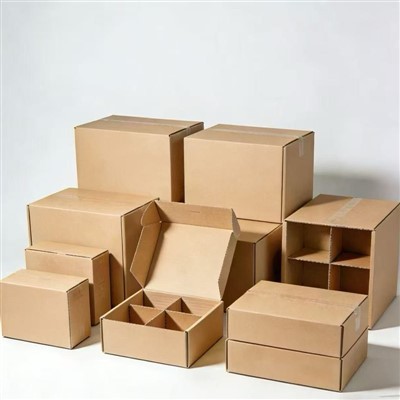
At the end of the day, paper packaging boxes’ shock-absorbing capabilities are underrated. People see brown cardboard and think it’s basic, but it’s a versatile, effective, eco-friendly solution that works for almost every shipping scenario. If you’re a business owner dealing with breakages, or just curious about upgrading your packaging, hit us up to talk through your needs. No weird contracts, no hidden fees—just a conversation about making sure your products get where they’re supposed to, in one piece.
Carton References
- Corrugated Packaging: Shock and Vibration Absorption, National Paper Packaging Association, 2022
- Flute Profile Performance in Corrugated Board, Journal of Packaging Science and Technology, 2019
- Sustainable Packaging for E-Commerce: Impact of Corrugated Materials on Product Damage, Small Business Packaging Review, 2023
Hangzhou Yitian Printed Goods Co., Ltd.
We’re well-known as one of the leading paper packaging box manufacturers and suppliers in China, also support customized service. Please feel free to buy high quality paper packaging box made in China here and get pricelist from our factory. For price consultation, contact us.
Address: Room 1719-1, Building 2, Xinglan Building, No. 2333 Xixing Road, Xixing Subdistrict, Binjiang District, Hangzhou City, Zhejiang Province
E-mail: sxyunchao2023@163.com
WebSite: https://www.ytcarton.com/
