If you’ve ever stared at a shelf of cocktail glassware in a well-stocked bar or a kitchen supply shop, you’ve probably paused over two specific pieces: the tall, straightforward Highball glass and the iconic, wide-rimmed Margarita glass. As someone who’s been a Highball glass supplier for over a decade—handing off glassware to craft bartenders, home mixologists, and even boutique hotels across the country—I’ve seen how easy it is to mix these two up when stocking a bar or restocking a home bar cart. It’s not just a casual mix-up, either; the shape and design of each glass aren’t arbitrary—they’re engineered to get the most out of the drinks they hold, the ingredients they work with, and even the experience of drinking them. Today, I’m breaking down exactly what sets these two glasses apart, no stuffy industry jargon, just real-world insight from someone who’s spent years getting these right for customers who rely on their glassware. Highball Glass

Let’s start with the Highball glass, because it’s the one most people have used without even realizing it’s a distinct, purpose-built tool. When I first got into the glass supply game, I thought a Highball was just “another tall glass” — until a veteran bartender at a popular downtown spot told me, “If you pour soda and whiskey into a tumbler and call it a Highball, you’re doing it wrong.” That stuck with me. A standard Highball glass is 10 to 16 ounces in volume, with a straight, vertical sidewall and a flat, stable base. The sides don’t taper in or out—they go straight up, no curves, no flares. That straight side is non-negotiable for how Highballs work, and it’s why I’ve spent years refining the Highball glasses I supply to make sure that side stays perfectly straight (not slightly tapered, not too thin, not prone to chipping when a bartender shoves a handful of ice into it).
What makes a Highball a Highball isn’t the glass itself—it’s the drink it’s meant to hold: a Highball, by definition, is a mixed drink that’s two parts mixer to one part spirit, poured over copious ice. That straight sidewall is critical here. When you pour soda, sparkling water, ginger beer, or any effervescent mixer into a glass, the straight sides keep the carbonation from fizzing out too fast. A curved or tapered glass would force bubbles to rise faster and pop at the surface, making a vodka soda or a whiskey ginger go flat before the drinker finishes their first sip. I’ve had customers tell me they switched to the Highball glasses I supply and noticed their soda-based drinks stayed bubbly 30 minutes longer—proof that that straight side isn’t just a design choice. The volume, too, is intentional: a 12-ounce Highball is the sweet spot for a standard Highball drink, leaving enough room for ice (the key component of a good Highball) without the drink feeling like a glorified ice cup.
Now, contrast that with the Margarita glass, and you immediately see a shape that’s built for show, not just function—though it does have its own specific purposes. A Margarita glass is typically 6 to 12 ounces, but that volume is almost entirely in the wide, flared rim— the part that sticks out like a shallow, slanted bowl connected to a thin stem. The stem is another key element: it’s long, usually 4 to 6 inches, and it’s designed to keep the drink away from the drinker’s warm hands. If you hold a Margarita glass by the wide bowl, the heat from your palm would warm the tequila-based drink (or the frozen margarita, for that matter) and dilute the flavors faster. That’s why stems matter for glasses meant for cold, spirit-forward drinks—something I’ve seen many home bartenders miss when they grab a Margarita glass and hold it by the bowl, ruining the chill before they even take a sip.
The wide rim is the Margarita glass’s signature, and it’s not just for looks. That broad edge is meant to hold salt (or sugar, for a frozen daiquiri) along the rim—you run a lime wedge around the glass’s outer edge, dip it into a plate of salt, and that wide rim gives you plenty of space for an even, thick coat of salt without it dripping into the drink. For frozen margaritas, the shallow bowl of the glass is perfect because frozen drinks don’t have the same need for extra space for ice as Highballs do—frozen margaritas are blended into a slush, so the shallow bowl holds the right amount without spilling. I’ve had a few Margarita glass clients (mostly taco bars) tell me their old, generic cocktail glasses were too narrow to hold a proper salt rim, so drinkers would either get salt all over their hands or none at all—another example of how shape directly impacts the drink experience.
But here’s where the lines start to blur, and where I see customers mix these two glasses up. You might think, “Can’t I just use a Margarita glass for a Highball? Or a Highball for a margarita?” Let’s test that with real examples. If you pour a whiskey ginger into a Margarita glass, the wide, shallow bowl means the straight sides that keep carbonation in are gone. The fizz will disappear in minutes, and the drink will taste flat by the time you’re halfway through. On the flip side, if you pour a margarita—especially a frozen one—into a Highball glass, the tall, narrow shape means you have to fill it almost to the brim, which makes it easy to spill when you add a salt rim or sip. The stem of a Margarita glass is also useless here, since you’d be holding a tall, heavy Highball glass by the base; a Margarita glass’s thin base isn’t built to hold the weight of a tall ice-heavy drink, either—it’s much more fragile.
Another common misconception: people use “cocktail glass” as a catch-all term, but there’s a difference between a standard cocktail glass (the coupe, which is stemmed, shallow, meant for shaken drinks like martinis) and a Margarita glass. Margarita glasses are a type of coupe-adjacent glass, but with that wide rim, while Highballs are part of the highball family, which includes other tall glasses like collins glasses (which are just slightly taller, 12 to 16 ounces, for drinks like a Tom Collins) and hurricane glasses, but Highballs are the most versatile of that group.
As someone who’s worked with these glasses for years, I’ve also noticed how durability plays a role for both, but in different ways. My Highball glasses are made with thicker, reinforced bases because they’re used for heavy, ice-heavy drinks—bartenders drop them, stack them, shove them into dishwashers on high heat, so they need to stand up to that. Margarita glasses, on the other hand, are made with thinner, more delicate glass for that wide rim and thin stem—they’re more for slow sipping in a controlled bar setting, not for stacking or shoving into a crowded dish rack. That’s why a lot of home bartenders who buy both (for different occasions) tell me they keep Highballs on hand for weeknight whiskey gingers and club sodas, and reserve Margaritas for weekend taco nights and special occasions.
I recently got an email from a bar owner in Austin who’d been mixing up Highballs and Margaritas for months—they were using Margarita glasses for their Moscow Mules, and their mules were going flat before happy hour ended, while their margaritas were spilling because the Highball’s narrow rim couldn’t hold salt. They switched to the Highball glasses I supply, and told me their carbonated drink sales went up 15% in a month, and their margarita complaints about spills dropped to almost zero. That’s the kind of real-world impact that makes all the difference—this isn’t just glassware, it’s a tool that affects how a customer perceives a drink, and how a bar runs its business.
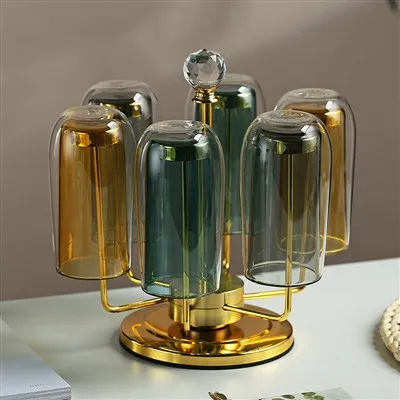
If you’re a home bartender stocking up for your next party, or a bar owner restocking for the weekend, it’s worth thinking about what you’re serving, not just grabbing a “nice glass” from the store. For any drink with lots of ice and effervescence: Highball glasses, every time. For salt-rimmed, frozen, or spirit-forward slush drinks: Margarita glasses. For shaken martinis or manhattans: coupes, but that’s a whole other conversation.
Glass Cup At the end of the day, the difference between a Highball glass and a Margarita glass isn’t just shape—it’s purpose. Every curve, every inch, every stem is designed to make your drink taste better, stay at the right temperature, and look the way it’s supposed to. If you’re ready to stock up on Highball glasses that hold up to daily use, or learn more about how to pick the right glass for your drinks, feel free to reach out to discuss your needs.
References
- "The Complete Guide to Cocktail Glassware," Spirited Magazine, 2022.
- "Bar Equipment Standards for Craft Bartenders," National Restaurant Association, 2021.
- "Carbonation Retention in Glassware: A Comparative Study," Journal of Food Service Science and Technology, 2020.
- "Margarita Glass Design and User Experience," Cocktail Professional Journal, 2019.
- "Highball Glass Durability for Commercial and Home Use," Tableware Industry Review, 2023.
Nexus Household Co., Ltd.
As one of the most experienced highball glass manufacturers and suppliers in China, we also support custom service. Please feel free to wholesale high quality highball glass for sale here from our factory. For free sample, contact us now.
Address: Room0101, 1st Floor, Unit 3, Building 3005, No. 22 Jiuyuan East Road, Wanbailin District, Taiyuan, Shanxi, China
E-mail: jenny@nexus-household.com
WebSite: https://www.nexus-household.com/
