If you’ve ever stepped inside a commercial building, a manufacturing plant, or even a large residential complex, you might not have noticed the unassuming metal cabinet bolted to a wall or tucked in a utility room. That’s switchgear, the unsung backbone of electrical power distribution that protects equipment, isolates faults, and routes power where it’s needed. For decades, two main types have dominated the market: manual and automatic switchgear. As a switchgear supplier who’s worked with engineers, building managers, and plant operators across North America, I’ve seen firsthand how choosing the right type can make the difference between a smooth, uninterrupted power supply and a costly, hours-long outage. Let’s break down exactly what sets manual and automatic switchgear apart, so you can make the right choice for your space. Switchgear

First, let’s start with the core function that unites both: switchgear is a collection of electrical devices—circuit breakers, fuses, switches, relays, and meters—that control, protect, and isolate electrical circuits. The key difference lies in how you operate those controls, and how they respond to changes in power flow or faults. Let’s dive into the details, starting with the basics of manual switchgear.
Manual switchgear, as the name suggests, requires physical human intervention to operate. Every action—opening a circuit during maintenance, closing it to restore power, tripping it during an overload—depends on a person flipping a switch or turning a handle, usually located on the front of the unit. For small to mid-sized applications, this model has been the go-to for decades, and it still holds value today. Let’s get specific: how does it work? When you need to shut off power to a machine for routine repairs, you walk to the switchgear, locate the corresponding breaker, and turn its handle to the “off” position. If a fault occurs—say, a short circuit on a production line—the breaker will trip automatically to prevent damage, but resetting it or isolating the faulty section requires a technician to manually move the switch to the correct position. It’s simple, reliable, and low-cost compared to its automatic counterpart, but it has clear limits.
Automatic switchgear, by contrast, relies on sensors and control mechanisms to operate without constant human input. Modern units include built-in voltage relays, current transformers, and programmable logic controllers (PLCs) that monitor power levels 24/7. If a fault is detected—like a sudden voltage spike, overload, or equipment failure—the system triggers a trip or switch action in milliseconds, often faster than a human could react. Even better, many automatic switchgear units can perform transfer switching: if the main power grid fails, they instantly switch to a backup generator, restoring power to critical loads (like hospital life support, server rooms, or emergency lighting) without any manual action. That’s a game-changer for applications where downtime isn’t an option.
Now, let’s compare the key categories that matter most to anyone evaluating switchgear: operation and speed, safety, cost, maintenance, use cases, and scalability.
Starting with operation and speed. Manual switchgear is straightforward: all actions are initiated by a person. Tripping during a fault is a safety feature of the breaker itself, but it’s a mechanical trigger that doesn’t respond to system-wide changes. Resetting or reconfiguring the switchgear takes time—minutes, at minimum, for a trained technician. Automatic switchgear, on the other hand, operates on pre-programmed logic. For example, a 480V commercial building’s automatic switchgear might be set to disconnect a non-critical load if the main power drops below 450V, to avoid draining the backup generator. That response happens in less than a second, which is critical for sensitive equipment like servers, where even a 10-second power dip can corrupt data.
Next, safety. Safety is non-negotiable in electrical systems, and both types have their own safety protocols. Manual switchgear requires proper lockout/tagout (LOTO) procedures anytime a technician works on it, to prevent accidental energization while repairs are underway. Since every operation is physical, there’s always a small risk of human error—like misidentifying a circuit or misflipping a switch, which can lead to shocks or arc flashes. Automatic switchgear reduces that risk in most routine operations, because once it’s programmed, it takes actions without people being present. However, it requires more sophisticated safety checks during installation and programming; a misconfigured relay could trigger an unnecessary trip or fail to trip when a fault occurs, creating its own hazards.
Cost is a big factor for most buyers, and here the gap is clear. Manual switchgear has a lower upfront cost: the units themselves are simpler, with fewer electronic components, so manufacturing costs are lower. Installation is also less complex—no need for PLC programming, remote monitoring wiring, or backup power integration. For small spaces, like a 10,000 sq ft retail store or a small office building, that lower upfront price tag is hard to beat. Automatic switchgear, though, comes with higher initial costs. The sensors, control systems, and transfer switch components add 30% to 100% to the unit’s price, depending on its capacity. But it’s important to look beyond upfront cost to total cost of ownership (TCO). Automatic switchgear reduces outage-related losses, which can run into thousands of dollars per hour for commercial or industrial operations. For example, a manufacturing plant with $100,000 in hourly production value might pay for an automatic unit’s premium in just a few avoided outages, while a small retail store might never see a return on the extra investment.
Maintenance is another area where the two differ. Manual switchgear’s maintenance is simple and predictable. You’ll regularly inspect the switch contacts for wear, tighten loose connections, and test the breaker’s trip function annually—most of it can be done with basic tools and a few hours of downtime. The downside is that you have to schedule that maintenance intentionally; if a switch fails unexpectedly, you’ll need a technician to respond, which adds to repair costs. Automatic switchgear, by contrast, requires more regular, specialized maintenance. The electronic sensors and control boards need calibration, and you’ll have to update software as needed to keep the system’s logic accurate. Many automatic units have remote monitoring capabilities, so you can get alerts for minor issues before they become major faults, but that means you’ll need a technician with experience in programmable control systems to service it—another added cost.
Now, let’s talk about use cases, because there’s no one-size-fits-all. Manual switchgear is ideal for low-risk, low-criticality applications where downtime is manageable. That includes small retail spaces, single-family residential additions, small workshops, or temporary power setups for construction sites. These environments don’t require instant power restoration, and their power loads are small enough that a manual operation won’t cause major disruption. For example, a small bakery can shut off power to its oven for repairs easily, then reset the switch later without affecting other equipment. Automatic switchgear shines in high-criticality, high-load applications where downtime is unacceptable. That includes hospitals, data centers, pharmaceutical manufacturing, large commercial office towers, and industrial plants with continuous production lines. A data center, for instance, can’t afford a 5-minute outage—even a momentary dip can take servers offline and lose customer data—so automatic transfer switchgear that switches to generators in milliseconds is non-negotiable here.
It’s also worth addressing a common misconception: that automatic switchgear is always “better” than manual. That’s not true. For a small business on a tight budget, paying extra for automatic features they’ll never use is a waste of capital that could go to other critical upgrades. Conversely, trying to use manual switchgear for a hospital’s emergency power system is a recipe for disaster. If a main power failure hits in the middle of the night, you can’t rely on a night janitor to run to the switchgear and manually switch over to backup power in time to keep life support systems running.
As a switchgear supplier, I see this trade-off play out every day. Last year, a small family-owned print shop came to me looking to upgrade their old switchgear. They had a budget of $2,000 and only needed to power their two presses, so we recommended a manual unit that fit their needs perfectly. A few months later, a regional hospital reached out for a quote. They needed switchgear that could handle a 2MW load, switch to a generator in 2 seconds, and monitor power 24/7. The automatic unit we recommended was over $50,000, but they told us it was non-negotiable—they couldn’t risk a single minute of downtime that would put patient lives at risk. That contrast drives home the core truth: the “best” switchgear depends entirely on your specific needs.
Now, let’s talk about emerging trends that are blurring the line between manual and automatic switchgear. Modern units now have hybrid features: manual switches with basic automatic trip functions, or automatic systems that let you operate a backup switch manually if needed. For example, some small commercial buildings use a semi-automatic switchgear: it automatically disconnects power if a fault occurs, but lets a manager reset the switch from a remote tablet, cutting down on the need for a technician to physically visit the site. These hybrids are growing in popularity, especially for mid-sized spaces that want a middle ground between cost and functionality.
Another trend is remote monitoring, which both manual and automatic switchgear can use now. Even manual units can be fitted with basic sensors to alert you if a circuit is drawing too much power, so you can schedule maintenance before a fault occurs. But for automatic units, remote monitoring is a core feature that lets you track power use, set alerts, and even adjust settings from anywhere, which is a huge benefit for multi-site operations.
At the end of the day, choosing between manual and automatic switchgear boils down to three questions: How critical is power uptime for your operations? What’s your budget, both upfront and for long-term maintenance? And how comfortable are your team with operating and maintaining the switchgear?
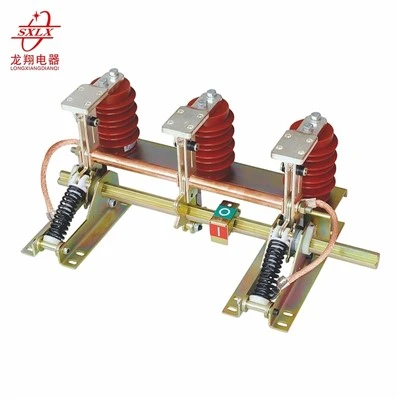
If you’re still unsure which type is right for your project, don’t hesitate to reach out to discuss your specific requirements. As a switchgear supplier with years of experience, I’ve worked with thousands of clients across all industries, and I can help you assess your load, downtime risks, and budget to find the solution that fits your needs perfectly. Whether you need a simple manual unit for a small shop or a custom automatic system for a large facility, we can help you make an informed choice to keep your power supply safe, reliable, and efficient.
Oil Immersed Transformer References
- IEEE Standard for Switchgear, Controlgear, and Substations (ANSI/IEEE C37.10-2018)
- National Electrical Code (NEC) Article 408: Switchgear and Switchboard Assemblies
- U.S. Department of Energy, “Electrical Switchgear Selection and Maintenance Guidelines” (2021)
- International Electrotechnical Commission (IEC) 62271-1: High-Voltage Switchgear and Controlgear – Part 1: Common Specifications
Shaanxi Longxiang Electrical Co., Ltd.
Shaanxi Longxiang Electrical Co., Ltd. is one of the most professional switchgear manufacturers and suppliers in China, also accepts customized orders. We warmly welcome you to buy advanced switchgear made in China here from our factory. Quality products and reasonable price are available.
Address: No. 619, Gaoxin Avenue, Comprehensive Bonded Zone, High-tech Development Zone, Baoji City, Shaanxi Province, China
E-mail: lee@longxiangelectric.com
WebSite: https://www.longxiang-electric.com/
