Hey there! As a supplier of Firewalls for Aruba, I often get questions about the supported protocols in Aruba firewalls. So, I thought I’d take a few minutes to break it down for you. Firewalls for Aruba
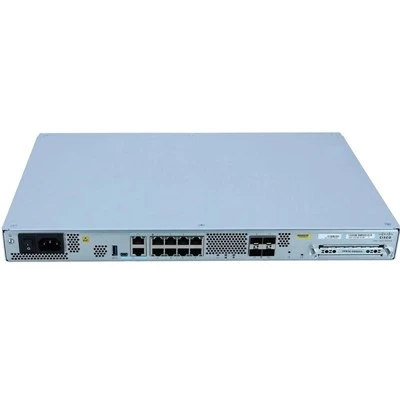
Let’s start with the basics. When we’re talking about protocols in firewalls, we’re essentially looking at the rules and standards that govern how data moves across networks. Aruba firewalls are designed to support a wide range of protocols, which is crucial for smooth and secure network operations.
First up, we’ve got the Transmission Control Protocol (TCP). TCP is a fundamental protocol in the internet protocol suite. It’s connection – oriented, which means it establishes a reliable connection between two devices before data is transferred. This is great for applications where data integrity is super important, like web browsing, email, and file transfers. Aruba firewalls support TCP traffic, allowing you to fine – tune the rules for incoming and outgoing connections. You can set up rules based on source and destination IP addresses, port numbers, and other TCP – specific parameters. For example, if you’re running a web server, you can configure the firewall to only allow TCP traffic on port 80 (HTTP) and port 443 (HTTPS).
Next is the User Datagram Protocol (UDP). Unlike TCP, UDP is connectionless. It doesn’t establish a connection before sending data, which makes it faster but less reliable. UDP is commonly used for applications that require low latency, such as online gaming, video conferencing, and streaming media. Aruba firewalls understand UDP traffic and let you manage it. You can create rules to control UDP traffic based on IP addresses and ports. For instance, if you have a voice – over – IP (VoIP) system, you can configure the firewall to allow UDP traffic on the specific ports used by that system.
Another important protocol is the Internet Control Message Protocol (ICMP). ICMP is used for network diagnostics and error reporting. It’s the protocol behind tools like ping and traceroute. Aruba firewalls support ICMP traffic, but you need to be careful with it. While it’s useful for troubleshooting, it can also be exploited by attackers. So, you can set up rules to limit ICMP traffic. You might only allow ICMP echo requests (ping) from specific IP addresses or deny certain types of ICMP messages to prevent attacks like ICMP flood attacks.
Moving on, we have the Address Resolution Protocol (ARP). ARP is used to map IP addresses to Media Access Control (MAC) addresses on a local network. Aruba firewalls take this into account as well. They can help protect your network from ARP spoofing attacks, where an attacker tries to trick your network devices by sending fake ARP messages. You can configure the firewall to monitor and control ARP traffic, ensuring that only legitimate ARP requests and replies are allowed.
In the realm of virtual private networks (VPNs), Aruba firewalls support several key protocols. The Point – to – Point Tunneling Protocol (PPTP) was one of the earliest VPN protocols. It’s simple to set up but has some security limitations. Still, Aruba firewalls can support PPTP if you need to maintain compatibility with older systems. The Layer 2 Tunneling Protocol (L2TP) is often used in combination with Internet Protocol Security (IPsec). IPsec provides a secure way to encrypt data, and L2TP creates the tunnel. Aruba firewalls support L2TP/IPsec VPNs, allowing remote users to securely connect to your corporate network. There’s also the Secure Sockets Layer (SSL) and its successor, Transport Layer Security (TLS). SSL/TLS VPNs are popular because they can be accessed through a web browser, making them convenient for users. Aruba firewalls support SSL/TLS – based VPNs, providing a secure and easy – to – use remote access solution.
Let’s not forget about multicast protocols. Multicast is used to send data from one source to multiple destinations simultaneously. It’s useful for applications like video streaming to multiple users or software updates across a network. Aruba firewalls can support multicast traffic, and you can define rules to manage it. You can control which multicast groups are allowed, who can send and receive multicast data, and so on.
Now, I know that’s a lot of information about protocols, but why does it matter? Well, when you have a firewall that supports a wide range of protocols, it gives you more flexibility in your network design. You can support different types of applications, connect to various networks, and ensure a high level of security. For example, if you’re a business with employees working remotely, you can use the VPN – related protocols supported by Aruba firewalls to give them secure access to company resources. If you’re running a media – streaming service, the support for UDP and multicast protocols allows you to deliver seamless content to your users.
If you’re in the market for a reliable firewall solution, and you’re considering Aruba firewalls, I highly recommend reaching out. As a supplier, I’ve seen firsthand how these firewalls can transform your network’s security and performance. Whether you’re a small business just getting started or a large enterprise with complex network requirements, Aruba firewalls, with their extensive protocol support, can be a great fit.
I’d love to have a chat with you about your specific needs. We can discuss which protocols are most important for your network, and how we can configure the Aruba firewalls to meet those requirements. Don’t hesitate to contact me if you’re interested in learning more or starting the procurement process. Let’s work together to build a more secure and efficient network.
Routers for Juniper References
- Oppenheimer, A. (2007). The Internet Edge Firewalls. Prentice Hall.
- Cisco Systems. (2009). Network Protocols and Applications. Cisco Press.
AITI Tech Limited
AITI Tech Limited is one of the most professional firewalls for aruba manufacturers and suppliers in China for over 20 years, featured by quality products and low price. Welcome to buy bulk discount firewalls for aruba in stock here from our factory. If you have any enquiry about pricelist, please feel free to email us.
Address: 6F, Haogong Building, Yannan Road, Futian District, Shenzhen, China
E-mail: kelly@hkaiti.com
WebSite: https://www.hkaiti.com/
