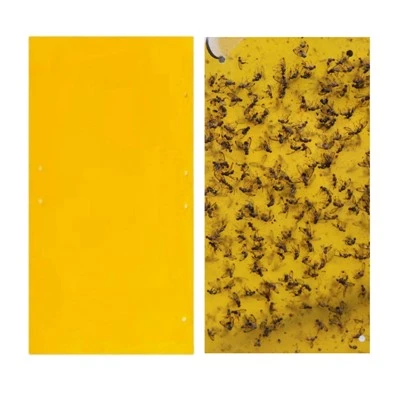
Hey there, if you’ve ever wandered through a farmers’ market at harvest time, watched a beekeeper tend to hives, or even picked fresh herbs from a balcony garden, you might’ve unknowingly crossed paths with one of our pheromone lures (yeah, the little vials or sticky cards we slip into crop rows or beehives to keep pests away and pollinators happy). But have you ever stopped to wonder what actually goes into those tiny, effective little lure tubes? Spoiler: it’s not some fancy lab-made “bug perfume” (though that’s basically what it is—way more high-tech, and 100% science-backed). As someone who’s been making and shipping these lures for over a decade, I’ve fielded this question more times than I can count, so let’s break it down real like—no stuffy PhD jargon, just the lowdown on the ingredients that make our lures work. Pheromone Lures
First off, let’s get one thing straight: pheromone lures are species-specific. That means a lure for corn earworm moths won’t work for Japanese beetles, and a lure for mason bees won’t attract honeybees (thankfully, we never want to mess with non-target critters). So every lure’s ingredient list is tailored to the exact insect it’s designed for. But even with that specificity, there are three core, non-negotiable groups of ingredients we start with, no matter what we’re making. Let’s dive into each one, because it’s way cooler than it sounds.
The first, and most critical, ingredient is the synthetic pheromone compound itself. Wait—what’s that, exactly? Pheromones are the chemical signals insects use to talk to each other: moths release them to find mates, certain beetles send out calls to gather crowds, some ants leave trails for food, even pollinators have their own tiny chemical cues. For our lures, we don’t just “extract” these from insects (that would be impossible—you’d need millions of moths to get enough scent to fill one vial). Instead, we synthesize them in a controlled lab, using specific chemical structures that are exact matches for the pheromone the target insect produces in the wild.
Let’s use a super common example to make this concrete: the codling moth, the tiny pest that ruins apples and pears by laying eggs inside the fruit. The female codling moth releases a pheromone called (E,E)-8,10-dodecadien-1-ol, which is basically her “come get me” signal to males. Our synthetic version is an exact copy—we don’t tweak it, we don’t add extra stuff, we just make that exact molecule. That’s the star of the show. For something like Japanese beetles, the main pheromone is (Z)-5-(1-cyclohexen-1-yl)-3-methylpentan-1-ol, and again, we synthesize that molecule precisely. Now, you might be thinking, “Wait—why not just use the real pheromone from actual bugs?” Believe me, we’ve looked into it. Raising enough moths to get a gram of pheromone would cost tens of thousands of dollars, take months, and be totally impractical for commercial lures that sell for a fraction of that. Synthetic is the only way, and modern lab processes make these molecules pure, consistent, and super effective.
But here’s the thing: that synthetic pheromone alone would evaporate in a day or two. You’d have a wisp of scent that’s gone before even a single male moth could find it. That’s where the second group of ingredients comes in: carrier matrices. These are the bases that hold the pheromone, slowly releasing it over weeks or even months, depending on the lure. Think of them like a tiny sponge that’s soaked in scent, releasing it in slow, steady doses so it doesn’t all disappear at once.
Carriers vary a ton, and we pick them based on what the lure is for and how long it needs to last. For some of our smaller, portable lures (like the ones gardeners use for Japanese beetles), we use flexible rubber septa—those little red or white rubber circles you might’ve seen in old lab vials. The pheromone gets absorbed into the rubber, and it seeps out through the porous material at a consistent rate for 4-6 weeks, which is perfect for a single growing season. For larger, field-level lures that need to last all 3-4 months of a pest’s active season, we use polymer matrices—like soft, plastic-like resin that melts slightly and releases the pheromone even slower, without breaking down in rain or hot sun. Some of our newest lures for high-temperature regions use a special wax blend carrier—wax holds scent really well, even when it’s 90°F outside, and it’s biodegradable, which is a big win for farmers who care about reducing plastic waste. We tested this last year for a corn pest in southern Texas, and the wax lures released pheromone steadily for 12 weeks, even through 100°F days—way better than the polymer ones we’d used before.
Now, you might be wondering: why not just use water or alcohol as a carrier? That’s a great question, and we actually tried that early on. A water-based lure might last a week, tops, before it evaporates or dries out. Alcohol is more volatile, so it releases the pheromone too fast, and it can even break down the synthetic pheromone molecule over time. Our carriers are specifically chosen for their stability—they don’t react with the pheromone, they keep it safe from UV light (another big one—sunlight can break down those tiny chemical molecules, so we need something that blocks UV rays a little, too) and they control the release rate perfectly. That’s the secret to a lure that works for weeks, not hours.
But wait—are there any other ingredients? Yeah, a small, non-negotiable third category: stabilizers and UV protectants. These are tiny additives, like 0.1-1% of the total mix, that keep the pheromone from breaking down when it’s in storage or out in the field. Think of them like sunscreen for the pheromone molecule. Without them, a lure stored in a warehouse for a month would have half its scent gone by the time it reaches the farmer, and a lure out in the sun would be useless in two weeks. The stabilizers we use are all food-grade, by the way—no weird chemicals that would harm bees, birds, or the environment. We run tests every batch to make sure the pheromone purity is still over 95% once it’s been in storage for 6 months, thanks to those stabilizers.
Let’s talk about what we don’t add, too, because that’s almost as important as what we do. We don’t add any scents that aren’t the target pheromone—we never want to accidentally attract the wrong insect. For example, a few years ago, a competitor tried adding a floral scent to their moth lures to “make them work better,” and guess what? They started attracting lots of honeybees, which are pollinators, not pests. That’s a huge problem because it draws pollinators away from the crops that need them, and it’s totally unnecessary. Our lures are pure—just the exact pheromone, a stable carrier, and a tiny bit of stabilizer. No extra fluff.
Now, let’s get real about why this all matters for our customers. Whether you’re a small-scale backyard gardener trying to keep Japanese beetles off your roses, a family farm growing apples, or a large operation managing corn pests, the ingredients of the lure directly affect how well it works. A lure with impure pheromone might attract 50% fewer moths. A lure with a bad carrier might stop releasing scent after two weeks. And if we use cheap stabilizers that leave toxic residue, that’s not something we’d ever stand for. That’s why at our lures company, we test every single batch in our small field test plots before we ship them out. Last growing season, we worked with an apple orchard in Washington state that was dealing with codling moth damage—they switched to our lures, and their fruit damage dropped from 18% to 2% that year. The difference? We used the exact pure pheromone, a polymer carrier that lasted 12 weeks, and food-grade stabilizers that didn’t harm their beneficial mites.
I know a lot of people hear “synthetic chemicals” and think it’s bad, but here’s the thing: these pheromone lures are way more eco-friendly than the alternative—broad-spectrum pesticides that kill every bug, good or bad. We’re not spraying poison; we’re just sending the right chemical signal so pests get confused, can’t find mates, and their populations drop naturally. That’s the whole point, and the ingredients are designed to make that happen without harming the environment.

So next time you see one of our pheromone lures hanging in a crop row, take a second to appreciate the tiny, precise mix of science that goes into it. It’s not just a little plastic vial—it’s a carefully calibrated blend of exact synthetic insect signals, a slow-release base, and a tiny bit of protection to make it last. If you’re looking to switch to lures for your garden or farm, or you want to learn more about how our ingredients work for your specific pest problem, reach out to our team to chat through your needs. We can help you pick the right lure, break down exactly what’s in it, and make sure you get the most effective, eco-friendly solution for your space.
Solar Insecticidal Lamp References:
Arn, H., & Löfqvist, J. (1978). Use of pheromones for insect pest management in agriculture. Annual Review of Entomology, 23(1), 267-285.
Witzgall, P., Kirsch, P., & Cork, A. (2010). Sex pheromones and their impact on pest management. Journal of Chemical Ecology, 36(1), 80-100.
El-Sayed, A. M. (2019). The Pherobase: Database of insect pheromones and semiochemicals. Retrieved from https://www.pherobase.com
Sichuan Ruijinte Technology Co., Ltd.
As one of the most professional pheromone lures manufacturers in China, we have world-leading production equipment and strong manufacturing capabilities. Please rest assured to wholesale high quality pheromone lures at competitive price from our factory. Customized orders are welcome.
Address: No. 616, 6th Floor, Building 1, No. 8, Tianjiu North Lane, High-tech Zone, Chengdu
E-mail: glock@rjt-agri.com
WebSite: https://www.rjtagri.com/
