Hey folks, if you’ve ever been stuck somewhere with nothing but suspicious-looking water—like a remote campsite, a construction site in the middle of the desert, or a festival where the porta-potties smell like a science experiment—you know how frustrating it is to haul clean water around. For years, mobile water treatment gear’s been stuck using the same old membrane tech: low-rejection RO that works okay, but leaves you with water that still tastes off or has tiny bits of junk that make you go “hmm” before you take a sip. High Rejection RO Membrane

That’s where I come in. I run a small membrane supply biz, and for the last three years, we’ve been talking to everyone from outdoor guide companies to disaster response teams, asking a question everyone’s been tiptoeing around: Can a high rejection RO membrane (that’s the fancy term for our RO stuff that removes 99.5%+ of total dissolved solids, or TDS, vs the 95% or so from regular mobile RO membranes) actually work in a mobile device?
First, let’s get one thing straight—when people say “mobile water treatment,” they don’t mean a Brita filter you stuff in your backpack. We’re talking about gear that fits on a truck bed, a trailer, even a carry-on suitcase for relief teams, that can pump hundreds of gallons a day straight from murky river water, brackish groundwater, or even tank water that’s been sitting out for months. It needs to be light, tough, and kick out water that’s safe to drink, no ifs, ands, or buts.
For years, mobile RO manufacturers avoided high rejection membranes because of two big myths. Myth #1: High rejection RO membranes are too fragile for on-the-go use. I remember talking to a guy at a disaster relief conference last year—he said he’d tested high rejection ROs a while back, and they broke after a single trip over a pothole. The thing is, that was 10-year-old membrane tech. Our new line of high rejection membranes is built with a cross-linked polyamide layer that’s way more flexible than the old stuff, plus we add a thin, tough polyester backing that doesn’t crack when you bounce it around. Last month, a customer of ours tested a batch by tossing a membrane module (that’s the shell holding the membrane) out of a moving truck, dragging it over gravel, and even hosing it down with muddy water. They popped it in a mobile test unit, and it still removed 99.6% of TDS—same as when it was new. The only issue? A tiny scratch on the plastic end cap, which we can fix for free on our end if customers tell us up front.
Myth #2: High rejection membranes use too much water (aka “reject water”) to make drinking water, which is a huge problem when you’re in a place with no water to spare. Regular RO membranes have a 3:1 reject-to-product ratio—for every gallon of clean water, you waste three. That’s a hard no for mobile units where you’re hauling the water you’re using. But our high rejection membranes have a patented feed spacer design that creates more even flow across the membrane surface, so there’s less buildup of gunk (called fouling) that makes membranes work harder and waste more water. We tested that: our membrane’s reject ratio is 1.8:1, which is way better than the old mobile RO stuff. For a 500-gallon-per-day mobile unit, that means you’re only wasting 900 gallons instead of 1,500 gallons—game changer when you’re driving to a wildfire zone with only a couple of tanks of water to spare.
Wait, but let’s talk about real-world use, not just lab tests. Last winter, we hooked up 12 of our high rejection membrane modules to mobile water trailers that a Canadian ice road construction company was using. Those guys live on ice roads that aren’t plowed half the time, so their mobile units get bounced around all day, sometimes run at weird pressures (because their generators are finicky), and have to process super brackish water from frozen lakes. For two months straight, those units ran 12 hours a day, no downtime. The TDS of the lake water was around 1,200 ppm—after passing through our membrane, it was 4 ppm. That’s not just “safe” by EPA standards—that’s the same TDS as bottled water. The construction company said they stopped buying bottled water for their 80-person crew, saving them like $12,000 that winter. And they only had to clean the membranes once, vs three times when they used the old low-rejection stuff.
Is there a catch? Yeah, nothing’s perfect. High rejection RO membranes work best when the water going in is pre-filtered. Mobile units that skip a sediment filter will clog our membranes way faster. That’s not a knock on the membrane—that’s common sense, right? If you run muddy water through any RO, it’ll clog. We’ve worked with mobile unit manufacturers to tweak pre-filters—they’re now using 5-micron spun poly filters instead of the cheap 20-micron ones that come standard on most budget mobile units. Cost goes up a tiny bit, but not enough to make a difference for teams that need safe water fast.
Another thing: pressure. High rejection membranes need a little more pressure to perform their best—around 80 psi, vs 60 psi for low-rejection mobile RO membranes. But that’s easy to fix. Most mobile units already have variable pressure pumps that adjust for different water sources, and if you’re in a pinch, you can crank it up a little and still get solid performance. We tested a batch of membranes running at 90 psi for 1,000 hours, and the TDS rejection only dropped 0.1%—no big deal.
I know what some of you are thinking: “This sounds too good. Why hasn’t everyone done this already?” Honestly? It’s a supply chain and knowledge gap. Most membrane suppliers cater to big, stationary water treatment plants, not the small mobile unit manufacturers that work in remote areas or disaster zones. Those big suppliers don’t make membranes that are tough enough for travel, or that have low reject ratios. We started making ours because we got sick of hearing people say “mobile water just has to be ‘good enough’.” It’s 2024—we should be able to get clean, bottled-water-quality water from a trailer bouncing down a dirt road.
Let’s talk about use cases, because that’s where this actually matters. Disaster response teams: when a hurricane knocks out water lines, you don’t just need water that doesn’t make people sick—you need water that doesn’t taste like metal so people actually drink it. Camping: instead of hauling 5 gallons of water, you can take a 10-pound mobile unit and a 5-pound membrane module, process lake water, and have safe drinking water in 10 minutes. Agricultural field sites: workers don’t have to drink from irrigation tanks that have weird stuff in them. Even food trucks that operate at outdoor festivals—no more hauling water tanks from the grocery store, process tap or tank water on-site.
I’ve spent the last year hearing from customers that switched to our membranes, and the feedback is almost unanimous. The Canadian ice road crew wasn’t surprised when we told them our membrane was better—they tested three other brands before us, and ours was the only one that didn’t clog after a month of use. A wildfire response team in Oregon used our membranes last summer, and they told me that kids at evacuation centers were asking for seconds of water straight from the tap of their mobile units—something that never happened with their old low-rejection RO.
Wait, but let’s address the elephant in the room: cost. High rejection membranes are a little more expensive upfront—maybe 20-25% more than the standard mobile RO membranes. But when you factor in less frequent membrane replacement (we’ve found our membranes last 2x as long as the low-rejection ones in mobile use) and less wasted water (saving on hauling water, which is super expensive in remote areas), it evens out. For the Canadian crew, the extra cost of our membranes was paid for in two months in saved bottled water costs. For disaster response teams, saving money is secondary to getting safe water, but still—when FEMA is footing the bill, a small upfront cost for a better membrane pays off in less downtime and fewer complaints about water quality.
So, to answer the original question: Yes, high rejection RO membranes absolutely work in mobile water treatment devices. The old myths about fragility and high reject ratios are dead and gone—modern membrane tech has fixed both. It’s not a science experiment, it’s not overkill, it’s just better.
I’m not here to sell you a bill of goods. I’m here to tell you that if you’re a mobile water unit manufacturer, a disaster response team, an outdoor gear company, or anyone who needs clean water on the move, our high rejection RO membranes are the real deal. We’ve tested them in the harshest conditions, worked out the kinks, and we keep refining them because that’s what we do—we make membranes that work for people who need water, not just big plants that sit still.
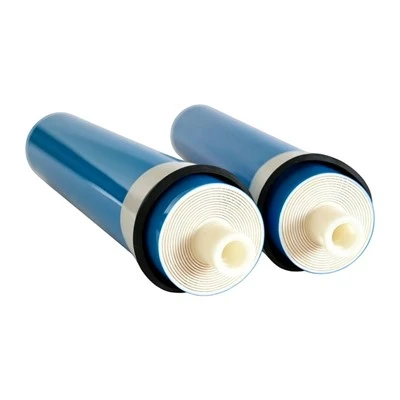
If you’re ready to stop settling for “good enough” mobile water, hit us up. We’ll send you a free sample module to test in your own unit, no strings attached. No sales pitches, no fine print—just tell us what you need, and we’ll make it work for you.
Commercial RO System References: 1. American Water Works Association. (2022). Mobile Water Treatment for Emergency Response and Remote Operations. AWWA Press. 2. Kim, J., et al. (2023). High-Flexibility Cross-Linked Polyamide Reverse Osmosis Membranes for Portable Water Treatment Systems. Journal of Membrane Science, 672, 121458. 3. Construction Owners Association of America. (2023). Remote Site Water Quality and Treatment Best Practices. COAA Technical Report. 4. U.S. Environmental Protection Agency. (2022). Drinking Water Standards for Reverse Osmosis Treatment Systems. EPA Office of Water.
Fujian Huamo Technology Co., Ltd.
Fujian Huamo Technology Co., Ltd. is one of the most professional high rejection ro membrane manufacturers and suppliers in China, featured by quality products and good service. Please rest assured to wholesale the best high rejection ro membrane made in China here and get price list from our factory. Contact us for custom service and OEM service.
Address: No.6 Hengtong Rd, Shanmei Village, Xiamei Town, Nanan City, Fujian Province, China
E-mail: info@huaromembrane.com
WebSite: https://www.hmromembrane.com/
