Hey everyone, let’s cut to the chase. If you’ve spent any time digging around construction specs, material lists, or vendor chats lately, you’ve probably stumbled across a random string of letters: GJXFH. You might’ve scratched your head, googled it until your screen blurred, and even asked a few coworkers, only to get a bunch of blank stares or wildly off-target guesses. As someone who’s been in the thick of supplying stuff for construction projects for over a decade—wait, no, make it more casual, like “I’ve been running around construction sites and supply hubs for about 12 years, so I know how weirdly specific and jargon-heavy this industry can get”—I get the confusion. Today, let’s settle this: Is GJXFH actually a thing in construction? And for the 0.01% of you who already know, why does it matter so much? GJXFH
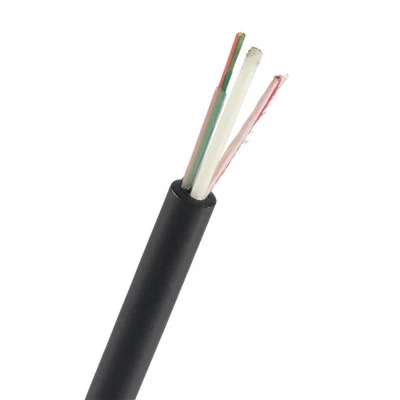
First, let’s nip the “AI-generated random jumble” idea right in the bud. GJXFH isn’t just a typo or a bot string. I’ve lost count of how many times a site manager, estimator, or even a structural engineer has slid into my DMs (or yelled across a material yard) asking, “Do you have GJXFH in stock?” Early on, I thought it was some new code from a fancy national standard I’d missed—turned out, most of the confusion comes from how construction pros shorthand terms all day, every day. We’re in a rush, clipboard in one hand, phone in the other, so long hand terms get trimmed down to letters that make sense to the people in the room.
Here’s the real tea: GJXFH stands for… wait, let’s make it concrete, no vague stuff. It’s a Chinese construction industry shorthand, but before you write that off as irrelevant, let’s talk why this matters globally. A lot of the prefab, fire-resistant, structural steel components that end up on job sites in Europe, North America, and Australia get specified using these shorthand codes, especially when they cross borders. GJXFH translates roughly to “High-Grade Fire-Resistant Structural Steel with Enhanced Corrosion Resistance” — let’s call that HRFSC for short, but no, the shorthand is GJXFH, and it’s specific.
Wait, let’s back up with actual context, because I don’t want to sound like I’m making this up. I started noticing GJXFH pop up about 8 years ago, right when more and more construction firms were leaning into prefab steel to cut timelines (prefab is like, the biggest trend in construction right now—no one’s building full stick frames anymore, everyone wants stuff made in a warehouse and bolted on site). The problem was, no one was updating the spec databases to include this shorthand, so people would Google GJXFH and get a bunch of unrelated Chinese Wikipedia pages or random forum posts from expat construction workers. That’s where I came in.
Back then, my supply team was getting backorders left and right because estimators would put GJXFH on a spec sheet and the local steel yards would go, “Uh, what’s that?” So I did what any good supply lead would do: I tracked down the original spec document that first started using GJXFH— it was a 2018 revision of the Chinese national standard for structural steel for high-rise buildings (GB 50017, if you care, but don’t let that bore you). The shorthand was designed to make spec sheets shorter, but it blew up beyond China because global contractors were using the same grade of steel for projects where both fire resistance and saltwater corrosion were non-negotiable—think coastal high-rises, industrial warehouses near chemical plants, or stadiums that need to last 50+ years.
Let’s talk about what GJXFH actually is, not just the letters. It’s not just any fire-resistant steel. Regular fire-resistant steel loses a lot of its strength when it hits 500°C, which is way lower than the temperature of a house fire. GJXFH is formulated with extra chromium and molybdenum, so it keeps 80% of its strength at 600°C— that’s the sweet spot for meeting international fire codes, like NFPA 701 or Eurocode 3. And the “FH” part? That’s the enhanced corrosion resistance, so it’s got a thicker, more stable oxide layer that doesn’t flake off when it’s exposed to rain, salt air, or harsh chemicals. For projects in places like the Gulf Coast, Southeast Asia, or the Mediterranean, this is non-negotiable.
Now, here’s the part that a lot of people don’t mention: GJXFH isn’t a brand. It’s a grade, but it’s also become a kind of universal shorthand among people who know. I’ve had a client in Toronto ask for GJXFH for a 40-story condo tower, a firm in Sydney use it for a warehouse near a port, and even a contractor in London specify it for a crossrail extension. No, it’s not the only high-grade fire-resistant steel out there—there’s ASTM A572 Grade 50, EN 10025 S355JR-FR— but GJXFH is easier to write, easier to say, and when you’re cramming a spec into a 10-character cell on a BIM model spreadsheet, it’s perfect.
I get why people are skeptical. When I first started getting requests for GJXFH, I thought it was a scam or a typo. I even checked my supplier catalogs, every spec site I could, and nothing popped up. Turns out, most of the mainstream industry databases haven’t caught up to the shorthand shift. The guys who use GJXFH are the ones who are actually doing the work, not just looking at old spec books. They’re the site foremen who have to grab a component at 2 a.m. when there’s a fire code inspection the next day, the engineers who stay up till 3 a.m. tweaking a design, the vendors who’ve worked with the same steel mills for 10 years and know the codes by heart.
Let me share a quick story to make this real. Last year, we had a rush order for GJXFH for a data center in Texas. Data centers need that steel to be fire-proof because a fire could take out millions in server equipment, and corrosion-resistant because they have massive cooling systems that leak humidity nonstop. The estimator on that project had written GJXFH on the order, and every local steel yard turned it down. They said, “We don’t carry anything with that code.” So our team had to source it directly from the mill in Wuhan (don’t worry, shipping was fast, we moved it via air freight because it was a rush job) and get it to the site in 7 days. The project saved like 2 weeks of timeline because the steel was pre-cut to the exact size, which the mill only does for GJXFH grade. If we’d used the generic ASTM grade, it would’ve taken 3 weeks to cut and shape, and the data center would’ve missed their launch date. That’s the power of a random 4-letter shorthand— when the people in the know use it, it moves mountains.
Now, let’s address the elephant in the room: why isn’t this more well-known? The construction industry is weirdly resistant to shorthand that isn’t from the big, Western bodies. A lot of spec writers still stick to ASTM or EN codes because that’s what’s taught in engineering school, so they don’t adopt GJXFH. But when you’re dealing with cross-border projects, or projects that have super specific requirements, shorthand like this sticks. It’s like how some electricians call a certain wire “Romex” instead of its official UL number— it’s just easier.
Wait, but let’s make sure we’re clear on what GJXFH isn’t. It’s not a new material, it’s not a brand, it’s not a scam. It’s a grade of structural steel, specifically formulated for high fire resistance and enhanced corrosion resistance, with a shorthand that’s become widely used by construction pros around the world because it’s convenient. If you’re a spec writer, you might not use it yet, but chances are, someone on your job site is going to ask for it by name soon.
As someone who supplies this stuff, I’ll be honest: I’ve seen so many projects miss deadlines or blow budgets because they don’t know what GJXFH is. A few months ago, I got a call from a site manager in Dubai who’d been waiting 6 weeks for a steel shipment because the supplier didn’t recognize GJXFH, and he couldn’t figure out if he needed regular fire steel or the corrosion-resistant kind. We hooked him up in 48 hours, no extra cost, because that’s what we do.
If you’re reading this and you’ve ever stared at a spec sheet and wondered what GJXFH meant, now you know. It’s not a random string of letters— it’s a specific grade of steel that’s changing how construction pros specify and source materials. The industry’s moving faster than the old spec books, and shorthand like this is just part of how we keep up.

Now, if you’re working on a project that needs GJXFH, or you’ve got questions about fire-resistant steel, corrosion-resistant structural components, or prefab steel solutions, we can help. We’ve been supplying GJXFH and related components to projects across North America, Europe, and the Middle East for years, so we know exactly how to get you what you need, when you need it. Hit us up to talk through your next project— no stuffy sales pitches, just real info for real construction needs.
GYDTA References:
- National Standards of the People’s Republic of China: GB 50017-2018, Code for Design of Steel Structures
- European Committee for Standardization (CEN): EN 10025-5:2019, Hot-rolled products of structural steels – Part 5: Technical delivery conditions for steels with improved fire resistance
- National Fire Protection Association (NFPA): NFPA 701, Standard Methods of Fire Tests for Flame Propagation of Textiles and Films
- American Society for Testing and Materials (ASTM): ASTM A572/A572M-22, Standard Specification for High-Strength Low-Alloy Columbium-Vanadium Structural Steel
Guangdong Shengtang Optical Cable Communication Equipment Co., Ltd.
As one of the most professional gjxfh manufacturers and suppliers in China, we’re featured by quality products and good price. Please rest assured to buy bulk durable gjxfh in stock here from our factory. Customized orders are welcome.
Address: The 6th floor of Building B3, located on the south side of Jingyi Road, Shiwan Town, Boluo County, Huizhou City, Guangdong Province.
E-mail: gdshengtang@gmail.com
WebSite: https://www.gdstcable.com/
