If you’ve ever worked in industrial manufacturing, semiconductor fabrication, pharmaceutical processing, or food and beverage packaging, you know how critical vacuum pumps are to keeping operations running smoothly. But here’s a secret most maintenance teams don’t always get right: the longevity and reliability of your vacuum pump often hinge on one tiny component—its bearings—and the lubricant you choose for those bearings. As a supplier of vacuum pump bearings, I’ve spent years working directly with plant managers, maintenance technicians, and design engineers to cut through the confusion around lubricant selection. I’ve seen a $50,000 vacuum pump fail prematurely because someone picked the wrong lubricant, and I’ve helped teams extend bearing life by 300% just by making a simple switch. Today, I want to break down exactly what kind of lubricant is suitable for vacuum pump bearings, based on real-world applications, industry testing, and hard-won experience. Vacuum Pump Bearings
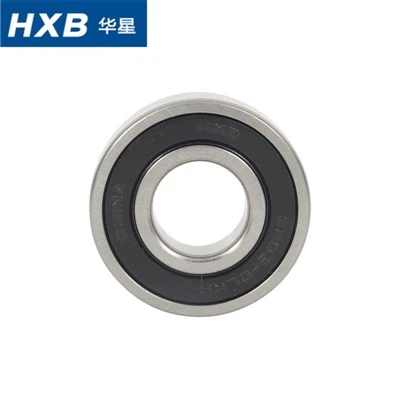
First, let’s get one thing straight: vacuum pump bearings are not the same as bearings in a standard electric motor or a conveyor belt. They operate in extreme environments, most of the time. Unlike bearings that run in open air, vacuum pump bearings often sit in a system where pressure can drop to 10^-7 Torr or lower—so low that even tiny amounts of foreign material, moisture, or volatiles in the lubricant can ruin the vacuum itself. Think about it: if your lubricant outgasses unwanted molecules into the vacuum chamber, that can contaminate your product (imagine semiconductor wafers with tiny residual oil molecules ruining their ability to conduct electricity, or pharmaceutical powders with unexpected chemical impurities). Or if the lubricant breaks down under high heat—many vacuum pumps run at 80°C to 150°C, especially oil-sealed rotary vane pumps—the byproducts can clog pump passages, increase friction, and cause bearings to seize. That’s why generic bearing greases or oils are almost never the right choice for vacuum pump applications.
So, what are the core requirements that a lubricant must meet for vacuum pump bearings? Let’s start with vacuum compatibility, hands down. This is non-negotiable. A lubricant’s vapor pressure has to be extremely low; we’re talking about less than 10^-8 Torr at operating temperature. If it’s higher than that, the lubricant will slowly vaporize, or outgas, into the vacuum system, leading to two big problems: lost pump efficiency (because you’re introducing extra gas that the pump has to remove) and product contamination. I once had a customer in the food packaging industry who used a standard lithium grease for their rotary vane vacuum pump. Within six months, their packaged snack bars had a faint, off taste—turns out the grease was outgassing hydrocarbons that seeped through the pump’s shaft seal and into the packaging. They switched to a vacuum-grade polyalphaolefin (PAO) grease, and the issue was gone immediately, and their bearing life doubled. That’s the difference vacuum compatibility makes.
Next, thermal stability. Most vacuum pump bearings operate under high load and moderate to high temperatures, and the lubricant has to resist oxidation and thermal breakdown to avoid forming sludge, varnish, or carbon deposits. If the lubricant oxidizes, it thickens, increases friction, and can leave hard deposits on bearing raceways and balls, causing premature wear. For pumps that run continuously (which is most industrial vacuum pumps), thermal stability is even more critical. I recommend lubricants with a high oxidation resistance—synthetic base oils are almost always better here than mineral oils. Mineral oils break down quickly at sustained high temperatures, usually lasting a few thousand hours, while synthetic lubricants can last 10,000 hours or more, even in harsh conditions. I’ve seen a customer in the aerospace component testing industry run their vacuum pump 24/7 for 18 months on a PAO-based grease, with no bearing replacement needed, whereas their previous mineral oil grease required bearing changes every 6 months.
Then there’s load carrying capacity and anti-wear properties. Vacuum pump bearings have to support heavy radial and axial loads, especially in larger pumps or pumps that operate at high speeds. The lubricant has to form a strong, durable film between the bearing surfaces to prevent metal-to-metal contact, which causes wear and pitting. Additives are a big part of this, but in vacuum applications, additive choice is tricky. Some anti-wear additives, like extreme pressure (EP) additives containing sulfur or phosphorus, can outgas or leave residues that contaminate the vacuum system. So you need lubricants that have either low-outgassing anti-wear additives or rely on the base oil’s inherent load carrying properties. Synthetic hydrocarbons and perfluoroethers (PFPEs) are good here, because their molecular structure creates a strong film that resists breakdown under load, without the need for harsh additives that cause contamination.
Moisture resistance is another key factor, especially for pumps used in applications like freeze drying, pharmaceutical manufacturing, or any process where moisture is present. Moisture in the vacuum pump can mix with lubricant, causing it to degrade faster, form corrosive byproducts, and reduce its ability to lubricate bearings. Vacuum-grade lubricants have additives that repel moisture or are hydrophobic, so they don’t mix with water vapor that enters the pump. I had a customer in the freeze drying industry who was dealing with rust on their bearings because their lubricant was absorbing moisture from the drying process. Switching to a hydrophobic PFPE grease solved the rust issue and cut bearing failure rates by 80%.
Now, let’s talk about the different types of lubricants commonly used for vacuum pump bearings, and when each is suitable. This is where a lot of people get overwhelmed, because there are so many options—let’s break them down by use case.
First, Polyalphaolefin (PAO) greases and oils. These are the most commonly used lubricants for general-purpose vacuum pumps, and they’re a workhorse. PAOs are synthetic hydrocarbons with very low vapor pressure, good thermal stability, and excellent load carrying properties. They’re compatible with most vacuum systems, and they don’t outgas enough to cause issues in low to medium vacuum applications (10^-3 Torr to 10^-7 Torr). PAO lubricants are also cost-effective compared to more specialized options, making them a great choice for most industrial vacuum pumps, like rotary vane, rotary piston, or claw pumps, used in applications like general manufacturing, packaging, or basic semiconductor processing. The only downside? PAOs can outgas slightly in high-vacuum or ultra-high-vacuum (UHV) applications, so they’re not ideal for systems below 10^-7 Torr. If you’re running a standard vacuum pump that operates in that medium range, PAO is usually your best bet. I recommend PAO greases with NLGI grades 2 or 3 for vacuum pump bearings, because they have the right consistency to stay in place on the bearings, even at the pump’s operating temperature, without leaking or thinning out too much.
Next, Perfluoroether (PFPE) lubricants. These are the go-to for high-vacuum and ultra-high-vacuum applications, as well as applications where extreme temperatures or chemical exposure is a factor. PFPEs have extremely low vapor pressure (way below 10^-10 Torr), so they barely outgas at all—perfect for UHV systems used in semiconductor manufacturing, surface science research, or analytical equipment like mass spectrometers. They’re also resistant to almost all chemicals, so if your vacuum pump is handling corrosive gases or vapors, PFPE lubricants won’t break down when exposed to those. The tradeoff? PFPEs are significantly more expensive than PAOs, so you only need them when you’re working in high-vacuum or harsh chemical environments. I always tell customers: if your process doesn’t require UHV and doesn’t have corrosive materials, skip PFPE and save money with PAO. But if you’re building semiconductors, working with hazardous chemicals, or running a pump at temperatures above 200°C, PFPE is non-negotiable. I had a customer in the semiconductor industry who was using PAO grease for their etch chamber vacuum pump, and they saw particle contamination on their wafers. Switching to a PFPE grease eliminated the particle issue entirely, even though the cost of the grease was 10x higher. For them, it was worth every penny, because a single batch of wafers can cost tens of thousands of dollars.
Then there’s silicone lubricants. Silicones have very low vapor pressure and good thermal stability, but they have a big drawback: they can outgas volatile organic compounds (VOCs) that are hard to remove from vacuum systems, and they’re not compatible with many materials used in vacuum pumps and chambers. For that reason, silicones are rarely recommended for vacuum pump bearings, unless it’s a very specialized low-vacuum application where contamination is not a concern. I almost never suggest silicone to customers, because the risk of contamination is just too high for most industrial uses.
Wait, what about dry lubricants? Some people ask if graphite or molybdenum disulfide (MoS2) is a good option for vacuum pump bearings. Dry lubricants work in vacuum environments, because there’s no oil or grease to outgas, but they have severe limitations. Dry lubricants don’t provide the same load carrying capacity as liquid lubricants, and they can wear out quickly, especially in pumps that run continuously. They’re mostly used for bearings in ultra-high-vacuum applications that run at extremely high temperatures, where even synthetic lubricants would break down. But for most standard industrial vacuum pumps, dry lubricants lead to much higher wear and bearing failure. I’ve seen a customer in a research lab try to use graphite lubricants for their UHV pump bearings, and they had to replace bearings every 3 months, compared to 2 years when they switched to PFPE grease. So dry lubricants are a niche option, not a general solution.
Now, let’s talk about common mistakes I see customers make when choosing lubricants for vacuum pump bearings. First, using general-purpose bearing grease or oil from a hardware store. Those lubricants are designed for open environments, not vacuum, so their vapor pressure is too high, and they’ll outgas, contaminate your process, and fail prematurely. Second, choosing a lubricant based solely on price. The cheapest mineral oil might seem like a good deal, but it will oxidize quickly, leading to bearing failure every 6 months, while a slightly more expensive synthetic lubricant will last 5 times longer, saving you money in maintenance and downtime. Third, not matching the lubricant to the application’s pressure and temperature. If you use a PAO grease in a UHV system, it will outgas enough to ruin your vacuum and your product, and if you use a PFPE grease in a low-pressure packaging pump, you’re wasting money for no reason.
So, how do you pick the right lubricant for your vacuum pump bearings, step by step? Let’s make this actionable. First, define your vacuum level: what’s the lowest pressure your pump operates at? If it’s below 10^-7 Torr, go with PFPE. If it’s between 10^-3 and 10^-7 Torr, PAO is perfect. If it’s above 10^-3 Torr (low vacuum), you can even consider a high-quality mineral oil if temperature is low, but synthetic is still better for longevity. Second, check your operating temperature: what’s the running temperature of your pump bearings? If it’s above 150°C, you’ll want a high-temperature synthetic lubricant, either PAO or PFPE, depending on vacuum level. Third, consider your process: are you handling corrosive materials, food products, pharmaceuticals, or semiconductors? If yes, prioritize low-outgassing, food-grade (if applicable) lubricants. Fourth, match the lubricant viscosity and NLGI grade to your bearing type and pump. For most vacuum pump bearings, NLGI 2 grease is the standard, as it provides good consistency to stay in place, but some smaller pumps might need NLGI 1. For oils, viscosity of 32 to 68 cSt at 40°C is typical for vacuum pump bearings.
As a supplier of vacuum pump bearings, I work closely with many lubricant manufacturers to ensure that the lubricants we recommend for our bearings are optimized for vacuum applications. We test lubricants alongside our bearings in controlled vacuum chambers to measure outgassing rates, wear resistance, and temperature stability, so we can give our customers tailored advice. One of the biggest pain points our customers face is premature bearing failure caused by bad lubricant selection, so we always ask about their pump type, operating conditions, and process to point them to the right lubricant. We don’t just sell bearings—we solve problems, and lubricant compatibility is a huge part of that.
At the end of the day, choosing the right lubricant for vacuum pump bearings is about balancing performance, cost, and process requirements. There’s no one-size-fits-all answer, but by focusing on vacuum compatibility, thermal stability, load carrying capacity, and process compatibility, you can avoid costly downtime, extend bearing life, and protect your product from contamination.
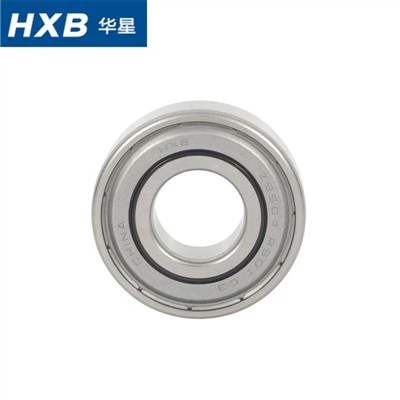
If you’re dealing with bearing issues in your vacuum pumps, or you’re not sure if you’re using the right lubricant, we’re here to help. We work with maintenance teams, plant engineers, and operation managers to analyze their specific application, recommend compatible lubricants and bearings, and support them every step of the way. Reach out to our team to discuss your vacuum pump bearing needs, and let’s make sure your operations run as reliably and efficiently as possible.
Household Appliances Bearings References
- Vacuum Technology: Foundations, Practices, and Applications, edited by Jean-Marie Launay, 2007.
- Lubrication of Rolling Bearings in Vacuum Environments, American Society of Mechanical Engineers (ASME) Paper 97-Trib-409, 1997.
- Perfluoroether Lubricants for Ultra-High-Vacuum Applications, Journal of Vacuum Science & Technology A, Vol. 12, No. 3, 1994.
- Synthetic Lubricants for Industrial Vacuum Pumps, Industrial Lubrication and Tribology, Vol. 62, No. 2, 2010.
- Food-Grade Lubricants for Vacuum System Applications, Food and Bioprocess Technology, Vol. 8, No. 5, 2015.
Hangzhou Huaxing Kechuang Holding Group Co., Ltd.
Hangzhou Huaxing Kechuang Holding Group Co., Ltd. is one of the leading manufacturers and suppliers of vacuum pump bearings in China, featured by quality products and good service. Please rest assured to buy bulk durable vacuum pump bearings from our factory. Welcome to view our website for more information.
Address: No.553 Yingbin Road, Linping, Hangzhou, 311100, China
E-mail: wmb@huaxingbearing.com
WebSite: https://www.hxbbearing.com/
